
What I Learned About Creativity at a Non-Creative School
No. 2
I used to think creativity meant mood boards and Adobe tabs. The kind of work that looked like art, smelled like late nights and coffee, and lived exclusively in a studio. So when I chose to study Advertising and Public Relations at a university known for its strong academic core and strategic communication focus, I assumed I was trading creativity for practicality.
Turns out, I was just redefining what creativity meant to me.
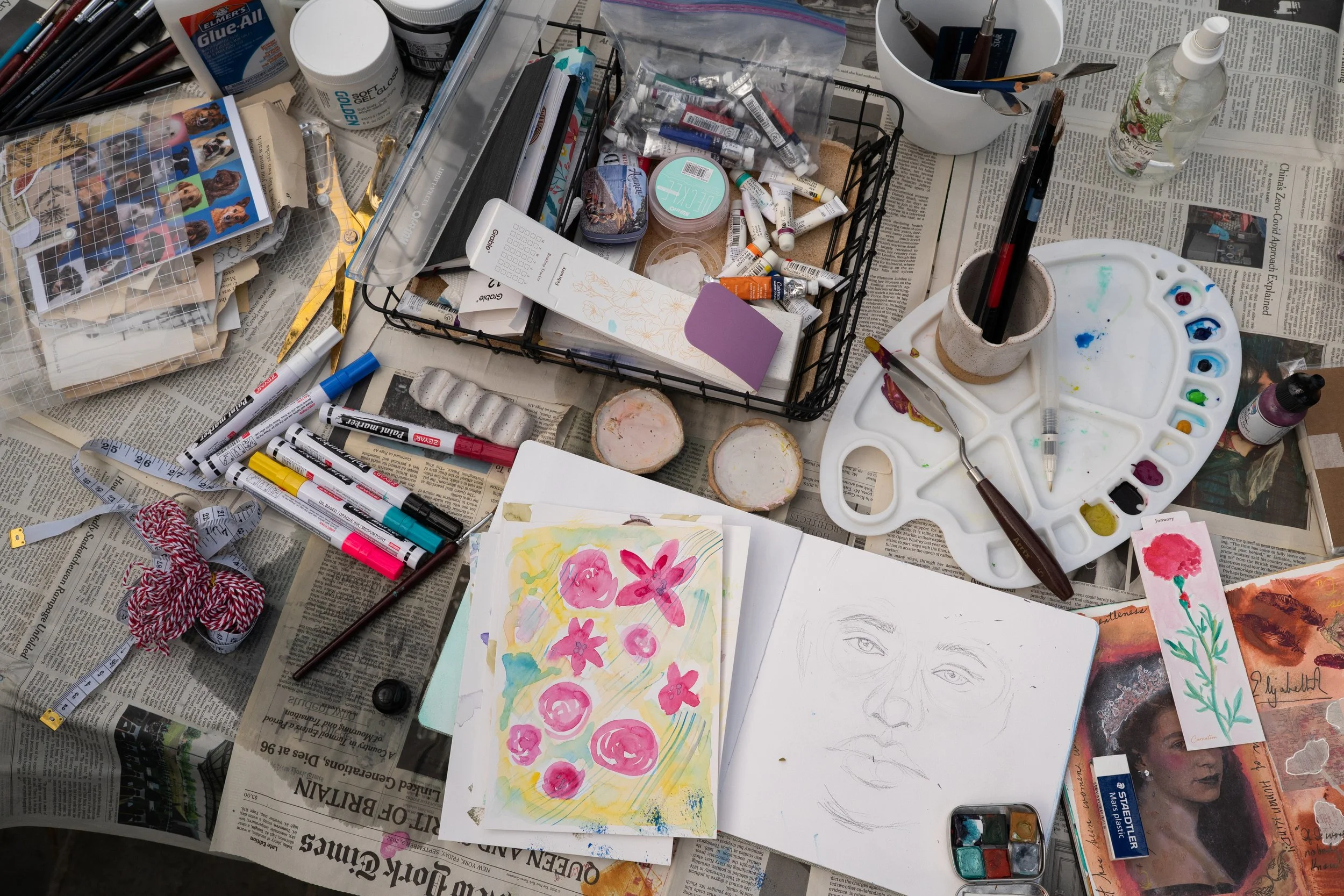
My workspace
The Advertising and Public Relations program at Loyola was incredible, sharp, strategic, and grounded in real-world communication, but not particularly creative leaning. It taught me how to build an argument, present ideas, and how to present something to someone in a manner that will make them care. I learned that storytelling doesn’t have to live on a Canvas or Photoshop, it also happens in a deck, a pitch, or a sentence that finally lands after five drafts. I started seeing creativity not as the final visual, but as the thinking that gets you there. That deep focus on research also changed how I create, it taught me to design and concept with intention. I learned that great advertising starts with understanding people and patterns, not just aesthetics. In my opinion, to be the best creative you have to be a well-rounded advertiser. An agency is an overlapping ecosystem, not a neatly divided silo. You need to be someone who can carry their weight in every part of the process, from strategy and copywriting to art direction, social media, and account work.
Because design resources were limited compared to more Art and Design focused schools, I had to look outward. I found creativity in other places: in film, food, travel, photography, conversations with my professors and side projects that had nothing to do with class. I learned to teach myself, to experiment, and to make things work with whatever tools I had. That process made me adaptive. It also made me realize that creativity doesn’t need permission, it just needs curiosity and eagerness. Somewhere between strategy briefs and communication theories, I realized creativity wasn’t something I turned on and off, but rather the lens I was seeing everything through. Creativity lived in how I solved problems, not just how I designed solutions.
Now, I see my non-creative education as the most creative thing I could have done. It taught me how to think like a designer and communicate like a strategist. It gave me the language to explain why ideas matter and the confidence to defend them.
Creativity, it turns out, doesn’t need a major. It just needs curiosity, courage, and the willingness to build it yourself.
